

Is Fall a Good Time to Plan an Inground Pool?
Fall is an excellent time to start planning an inground pool installation in New England. Although your exact construction schedule will depend on the pool type, project scope, property conditions, and local approval process, beginning in the fall gives you more time to prepare.
A pool project involves much more than selecting a shape and deciding where to place it. Homeowners may also need to consider:
- Pool type, size, shape, and depth
- Property access and equipment requirements
- Grading, excavation, and drainage
- Patios, walkways, and retaining walls
- Fencing and other safety features
- Pool houses, pavilions, or shaded areas
- Outdoor kitchens and entertaining spaces
- Landscape lighting and plantings
- Local zoning and approval requirements
Starting these conversations early allows the entire backyard to be considered as one connected project.
More Time to Compare Different Pool Types
Stone Ridge Outdoor Experiences installs fiberglass, gunite, vinyl-liner, and radiant pools. Each option offers different advantages, and the right choice will depend on your property, budget, design preferences, and long-term priorities.
Fiberglass Pools
Fiberglass pools arrive as premanufactured shells and are available in a selection of established shapes and sizes. Their smooth, nonporous surfaces make them relatively easy to maintain, while their installation process can be faster than some other inground pool options.
Gunite Pools
Gunite pools offer extensive flexibility in their shape, size, depth, and design. They are a strong option for homeowners who want a highly customized pool, integrated spa, tanning ledge, or distinctive architectural appearance.
Vinyl-Liner Pools
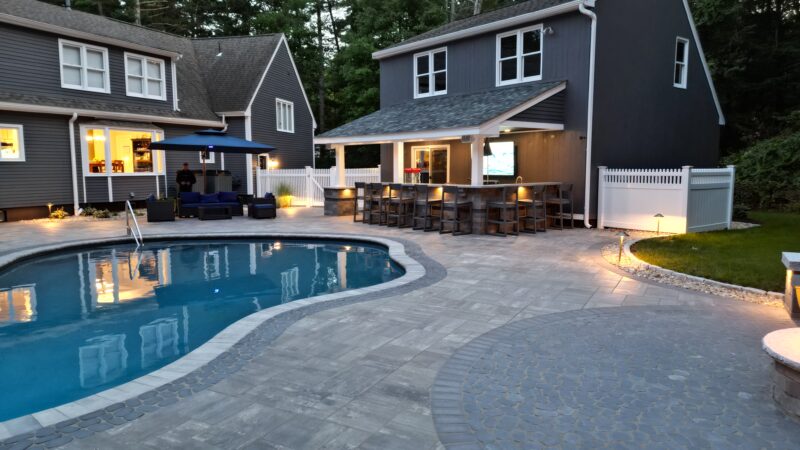
Vinyl-liner pools provide a smooth interior surface and can offer flexibility in shape and size. They are often selected by homeowners looking for an attractive inground pool at a more approachable initial cost.
Radiant Pools
Radiant pools use insulated wall panels and can work with various property conditions. Depending on the design, they may be installed inground, above ground, or partially inground, making them a versatile option for certain backyards.
Planning during the fall gives you an opportunity to compare these pool systems carefully instead of making a quick decision as summer approaches. You can also read our complete comparison of fiberglass, gunite, and vinyl-liner pools.
Create a Complete Backyard Master Plan
One of the most important benefits of starting early is the ability to plan beyond the pool itself.
A successful pool area should feel connected to the home, landscape, and way the space will be used. The patio should provide enough room for seating and circulation. Pool fencing should deliver safety and privacy without making the yard feel closed in. Outdoor lighting should improve nighttime visibility while highlighting important design features.
Homeowners may also want to incorporate an outdoor kitchen or patio, fire feature, pool house or pavilion, retaining wall, planting beds, or entertainment area. When these features are planned together, the finished backyard generally feels more cohesive and functions more effectively.
Stone Ridge Outdoor Experiences can develop a complete master plan that brings these components together rather than approaching each improvement as a separate project. Learn more about how our design-build process simplifies complex outdoor projects.
Evaluate Your Property Before Designing the Pool
Every backyard presents different opportunities and challenges. The available space is important, but it is only one part of determining what can be built.
The design team may also need to consider:
- Property boundaries and required setbacks
- Changes in elevation
- Soil and drainage conditions
- Access for excavation equipment
- Existing utilities
- Septic systems or private wells
- Sun exposure and natural shade
- Nearby trees and root systems
- Views from the house
- Privacy from surrounding properties
A smaller, sloped, or unusually shaped yard does not automatically prevent a homeowner from installing a pool. It may simply require a more thoughtful design involving excavation and retaining walls, grading, drainage improvements, or a different pool configuration.
Evaluating these conditions during the fall provides time to develop practical solutions before construction begins.
Use 3D Design to Visualize the Finished Backyard
It can be difficult to imagine how a pool, patio, landscaping, fencing, and outdoor structures will look based on measurements or individual material samples. A custom 3D landscape design allows homeowners to see how the major elements will work together before construction starts.
This process can help answer important questions:
- Is the pool appropriately sized for the yard?
- Is there enough patio space for furniture?
- How will people move between the house and pool?
- Where should an outdoor kitchen or fire feature be placed?
- Will the landscaping provide enough privacy?
- How will retaining walls affect the layout?
- What will the backyard look like from inside the home?
Making adjustments during the design phase is considerably easier than changing the layout after excavation or hardscape installation has begun.
Prepare for Local Approvals
Pool projects may be subject to local zoning requirements, building codes, setbacks, safety regulations, and inspections. Requirements can vary between communities in New Hampshire, Massachusetts, and Maine.
Stone Ridge Outdoor Experiences does not obtain permits on behalf of homeowners, but we provide detailed project plans that are ready to be submitted as part of the local approval process. Starting in the fall gives homeowners additional time to contact the appropriate municipal departments, understand local requirements, and complete the necessary applications.
Because approval timelines vary, beginning early can help reduce the likelihood that paperwork delays the desired construction schedule.
Select Materials Without Feeling Rushed
A complete pool and outdoor living project can involve numerous materials and finishes, including:
- Pool interior colors and finishes
- Coping materials
- Pavers or natural stone
- Retaining-wall products
- Fence styles and colors
- Outdoor kitchen finishes
- Lighting fixtures
- Planting materials
- Pavilion or pool-house details
These decisions affect more than appearance. Homeowners should also consider durability, maintenance, heat retention, slip resistance, drainage, and how materials respond to New England’s freeze-thaw conditions.
Fall planning provides more time to compare options and create a consistent design that complements the home. Stone Ridge’s hardscape design and installation services can integrate patios, walkways, retaining walls, and fire features into the overall pool environment.
Plan Landscaping as Part of the Pool Project
Landscaping can make a new pool feel like a natural part of the property. Plantings can add privacy, soften hardscape areas, direct movement, create seasonal color, and help define separate spaces for swimming, dining, and relaxing.
However, plants around a pool should be selected carefully. Excessive leaf drop, aggressive root systems, thorns, or plants that attract large numbers of insects may create maintenance or comfort problems.
Planning the pool and landscaping together makes it easier to choose appropriate plants and preserve enough space for their mature size. Explore our professional planting services to learn how landscaping can complete your outdoor space.
Begin Planning Before Spring Demand Arrives
Waiting until spring to begin designing a pool can compress many decisions into a shorter period. Homeowners may need to evaluate contractors, choose a pool type, finalize the layout, select materials, prepare approval documents, and coordinate construction while many other families are doing the same thing.
Beginning in the fall does not guarantee a particular completion date, but it gives you more time to make deliberate decisions and establish a realistic project schedule.
By the time warm weather returns, you can be much further along than homeowners who are only beginning to explore their options. For additional planning information, read our complete guide to building a backyard pool in New England.
Start Planning Your New England Pool This Fall
The best pool projects begin with careful planning. Starting in the fall allows you to compare pool types, evaluate your property, create a 3D design, prepare for local approvals, and coordinate the pool with the rest of your outdoor living space.
Stone Ridge Outdoor Experiences designs and builds custom pools and complete outdoor environments throughout Southern New Hampshire, the North Shore of Massachusetts, and select areas of Southern Maine. Our team works with homeowners to plan fiberglass, gunite, vinyl-liner, and radiant pools alongside patios, outdoor kitchens, landscape lighting, plantings, fencing, pavilions, and other outdoor features.
If you are hoping to enjoy a new pool in the future, you do not have to wait until spring to begin. Contact Stone Ridge Outdoor Experiences this fall to start developing a thoughtful plan for your backyard.


